
A story: one family, one paycheck
This is the kind of family we talk to every week.
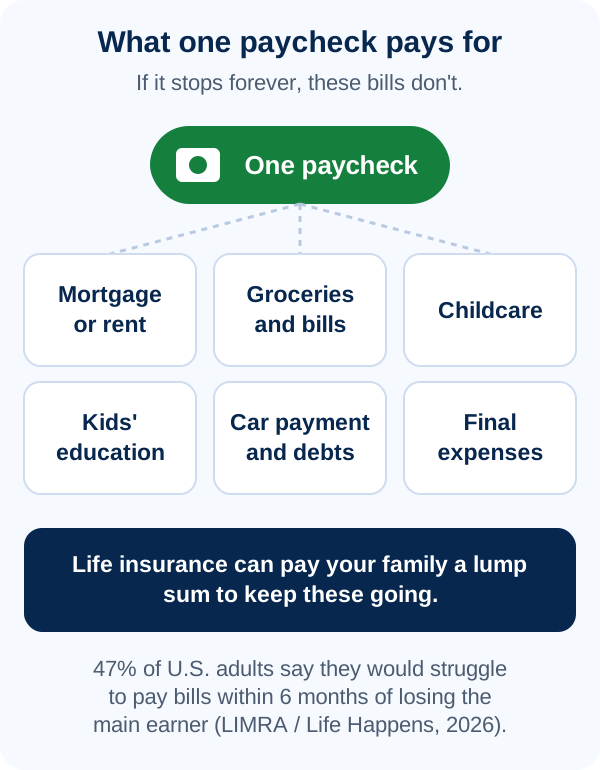
Life insurance is not really about dying. It's about the people who count on your paycheck: the mortgage, the groceries, the kids' school. Here is how it works, in plain words.
This is the kind of family we talk to every week.
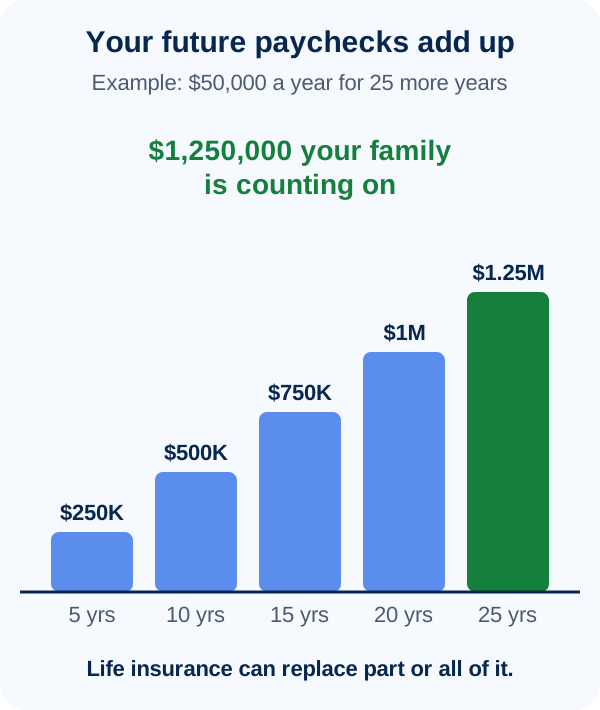
Most people insure their car and their house. But for a working family, the most valuable thing is often the paycheck. $50,000 a year for 25 more years is $1.25 million.
When we help a family choose an amount, we look at four things:
Why people buy it
In the 2026 study by LIMRA and Life Happens, the top reasons people gave for owning life insurance included covering burial and final expenses (57%), replacing a wage earner's lost income (27%) and paying off the mortgage (21%).
For many families, the home is where the kids' school, friends and church are. If the main paycheck stops, the mortgage can be the first bill to fall behind.
Life insurance can pay off the mortgage or cover the payments for years, so nobody has to move at the worst possible time.
Life insurance can put money aside for daycare now and for trade school or college later. You decide who receives the money, and you can name more than one person.
If your kids are young, ask us how to set up the beneficiary the right way, so the money can actually be used for them.
Coverage through work is a good start. But it is usually tied to the job. If you change jobs, get laid off or retire, it may end.
The amount is also often small compared with what a family needs, for example one or two years of pay. A personal policy stays with you, wherever you work.
Life insurance pays when someone dies. But a long illness or injury can also stop a paycheck. Social Security says a 20-year-old worker has a 1 in 4 chance of becoming disabled before full retirement age.
Social Security disability is only for conditions expected to last at least a year, and it generally starts after a 5-month wait. Some life policies have extra options (called riders) that can help if you become seriously ill. Ask us what is available for you.
There's no single number. Start with how many years your family would need your income, add what's left on the mortgage and other debts, then add future costs like your kids' education. We can do the math with you in a few minutes.
Term life covers you for a set number of years, for example 20 or 30, often while the kids are growing up and the mortgage is being paid. Permanent life insurance, such as whole life, is meant to last your whole life and can build cash value.
Often, yes. If a stay-at-home parent dies, the family may suddenly need to pay for childcare, rides to school and help at home. Life insurance can help pay for that.
It is a good start, but it is usually tied to the job and the amount is often small. Check how much you have and what happens if you leave the job.
Often yes, but it depends on the person and the policy. Some policies ask health questions or need a medical exam, and others ask fewer questions. We will help you look at the options.
The people you name as beneficiaries. The money usually goes to them directly. If your kids are minors, ask us how to name them the right way.
Send us your policy and we'll check your coverage, including coverage through work. A licensed agent will walk you through it in plain words. We call back within 1 hour during business hours.
Send us your policy and we'll check your coverage →📄 Send us your policy – we'll check your coverage
A photo of the first page (declarations page) is enough.
M&K Agency · 33550 S Dixie Hwy, Suite 102, Florida City, FL 33034 · Mon–Fri 9–6, Saturday by appointment · Florida license #L109526
Takes 30 seconds. A real agent calls you back fast.
This page is general information, not legal, tax or financial advice, and not policy language. What a policy pays depends on its terms, and approval depends on the insurer. Stories marked "Example" are made up to explain the idea. Statistics come from the public sources linked below.
Facts on this page were checked against these sources on October 3, 2026.